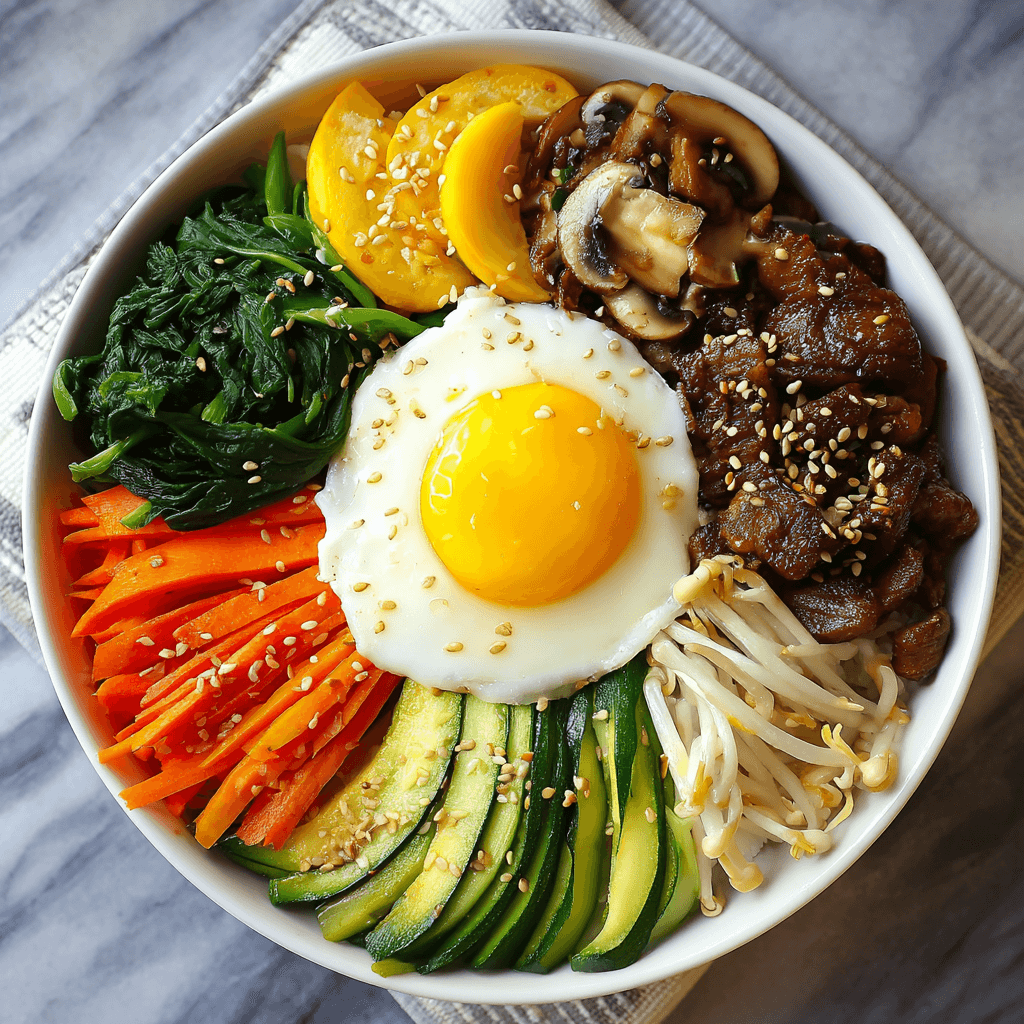
Korean Bibimbap is a colorful and nutritious rice bowl topped with a variety of vegetables, protein, and a fried egg, all mixed together with a spicy gochujang sauce. This dish is not only visually appealing but also packed with flavor and texture.
Ingredients
For the Bibimbap:
- 2 cups cooked rice (white or brown)
- 1 cup spinach (blanched)
- 1 cup carrots (julienned)
- 1 cup zucchini (julienned)
- 1 cup mushrooms (shiitake or button, sliced)
- 1 cup bean sprouts (blanched)
- 1 cup sliced beef (or tofu for a vegetarian option)
- 4 eggs
- 2 tablespoons vegetable oil (for cooking)
- Sesame oil (for drizzling)
- Sesame seeds (for garnish)
- Salt and pepper (to taste)
For the Gochujang Sauce:
- 3 tablespoons gochujang (Korean chili paste)
- 1 tablespoon sesame oil
- 1 tablespoon sugar
- 1 tablespoon rice vinegar
- 1 teaspoon minced garlic
- 1 teaspoon soy sauce
Timing
Making Korean Bibimbap Bowl takes about 20 minutes for preparation and 15 minutes for cooking.
Instructions
Step 1: Prepare the Gochujang Sauce
- Mix Sauce Ingredients: In a small bowl, whisk together the gochujang, sesame oil, sugar, rice vinegar, minced garlic, and soy sauce until smooth. Set aside.
Step 2: Cook the Vegetables and Protein
- Sauté Vegetables: In a skillet, heat 1 tablespoon of vegetable oil over medium heat. Sauté the carrots and zucchini for about 3-4 minutes until tender. Season with salt and pepper. Remove from the skillet and set aside.
- Cook Mushrooms: In the same skillet, add another tablespoon of oil and sauté the mushrooms until golden brown, about 3-4 minutes. Season with salt and pepper.
- Cook Beef or Tofu: If using beef, cook the sliced beef in the skillet until browned and cooked through, about 4-5 minutes. For tofu, sauté until golden on all sides.
Step 3: Fry the Eggs
- Fry Eggs: In a separate pan, fry the eggs sunny-side up or to your desired doneness.
Step 4: Assemble the Bibimbap Bowl
- Layer the Rice: In a large bowl or individual serving bowls, place a generous scoop of cooked rice at the bottom.
- Add Toppings: Arrange the sautéed vegetables (spinach, carrots, zucchini, mushrooms, and bean sprouts) and cooked beef or tofu on top of the rice.
- Top with Egg: Place a fried egg on top of the vegetables.
Step 5: Serve
- Drizzle Sauce: Drizzle the gochujang sauce over the top and add a sprinkle of sesame seeds and a drizzle of sesame oil.
- Mix and Enjoy: Serve immediately, allowing everyone to mix their bibimbap together before eating!
Nutritional Information
Here’s a quick overview of the nutritional content of Korean Bibimbap Bowl (per serving, based on 4 servings):
| Nutrient | Amount per Serving |
|---|---|
| Calories | 450 |
| Protein | 20g |
| Fat | 18g |
| Carbohydrates | 55g |
| Fiber | 5g |
| Sugar | 3g |
Tips for Customization
- Vegetable Variations: Use any seasonal vegetables you like, such as bell peppers, radishes, or sweet potatoes.
- Spicy Option: Add extra gochujang or sliced chili peppers for more heat.
- Protein Choices: Substitute beef with chicken, shrimp, or a plant-based protein for variety.
Conclusion
Korean Bibimbap Bowl is a vibrant and satisfying dish that brings together a variety of flavors and textures. Perfect for a quick weeknight dinner or a special occasion, this bowl is not only delicious but also visually stunning. Enjoy this delightful recipe!
Korean Bibimbap Bowl Recipe
Ingredients
- For the Bibimbap:
- • 2 cups cooked rice (white or brown)
- • 1 cup spinach (blanched)
- • 1 cup carrots (julienned)
- • 1 cup zucchini (julienned)
- • 1 cup mushrooms (shiitake or button, sliced)
- • 1 cup bean sprouts (blanched)
- • 1 cup sliced beef (or tofu for a vegetarian option)
- • 4 eggs
- • 2 tablespoons vegetable oil (for cooking)
- • Sesame oil (for drizzling)
- • Sesame seeds (for garnish)
- • Salt and pepper (to taste)
- For the Gochujang Sauce:
- • 3 tablespoons gochujang (Korean chili paste)
- • 1 tablespoon sesame oil
- • 1 tablespoon sugar
- • 1 tablespoon rice vinegar
- • 1 teaspoon minced garlic
- • 1 teaspoon soy sauce
Instructions
1. In a small bowl, whisk together the gochujang, sesame oil, sugar, rice vinegar, minced garlic, and soy sauce until smooth. Set aside.
2. In a skillet, heat 1 tablespoon of vegetable oil over medium heat. Sauté the carrots and zucchini for about 3–4 minutes until tender. Season with salt and pepper. Remove from the skillet and set aside.
3. In the same skillet, add another tablespoon of oil and sauté the mushrooms until golden brown, about 3–4 minutes. Season with salt and pepper.
4. If using beef, cook the sliced beef in the skillet until browned and cooked through, about 4–5 minutes. For tofu, sauté until golden on all sides.
5. In a separate pan, fry the eggs sunny-side up or to your desired doneness.
6. In a large bowl or individual serving bowls, place a generous scoop of cooked rice at the bottom.
7. Arrange the sautéed vegetables (spinach, carrots, zucchini, mushrooms, and bean sprouts) and cooked beef or tofu on top of the rice.
8. Place a fried egg on top of the vegetables.
9. Drizzle the gochujang sauce over the top and add a sprinkle of sesame seeds and a drizzle of sesame oil.
10. Serve immediately, allowing everyone to mix their bibimbap together before eating.